Digital CX Strategy: Transitioning a Viral Brand into a Legacy Icon
How does a social-first beauty brand move beyond TikTok virality to build multi-generational trust and authority?
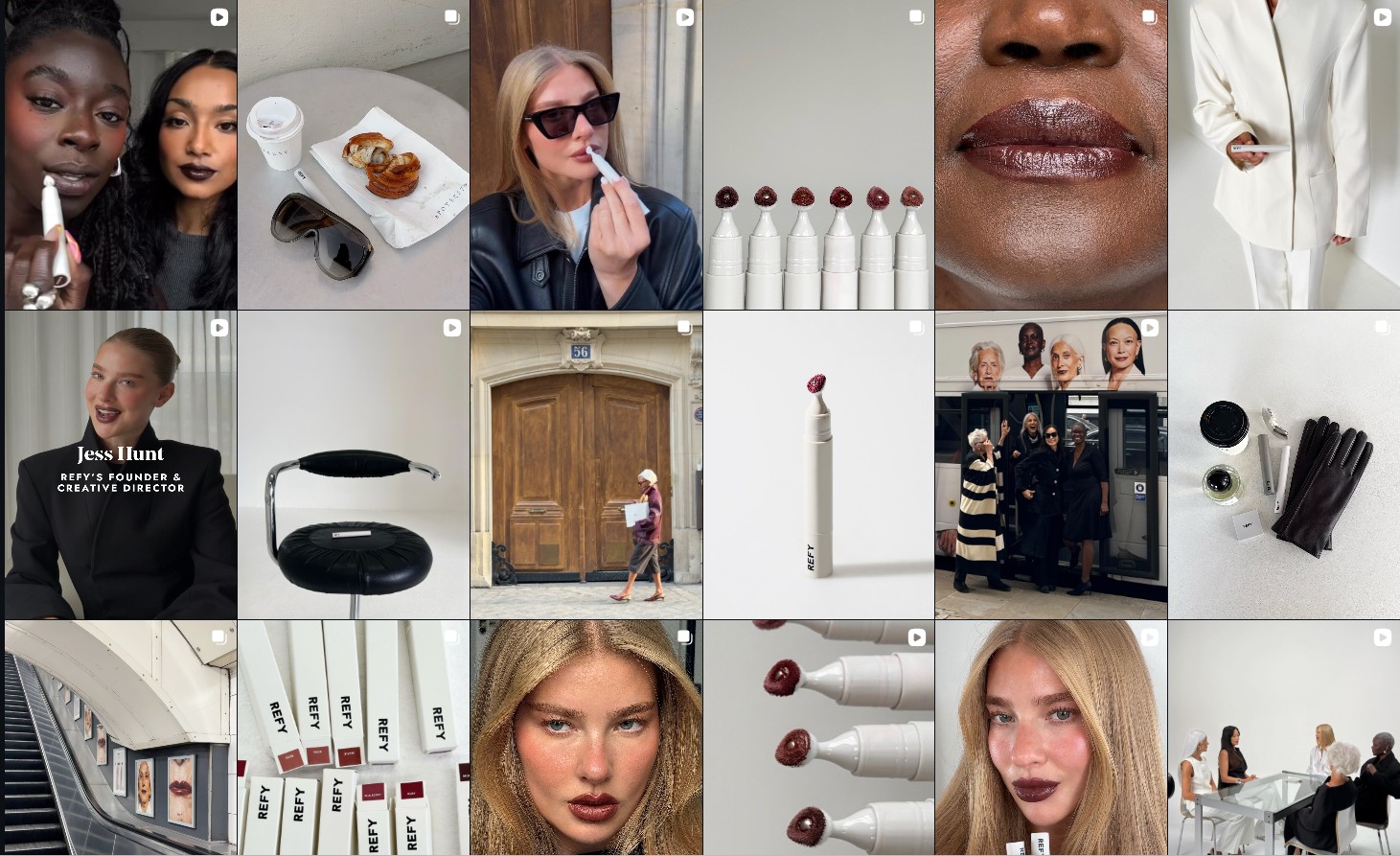
The Context
Refy Beauty, founded in 2020 by influencer Jess Hunt and entrepreneur Jenna Meek, stands at a pivotal transition point. After achieving exponential growth with 120% year-over-year revenue increases by late 2023, the brand began shifting its focus from being a viral, trend-driven “TikTok brand” to establishing itself as a multi-generational legacy icon.
While its minimalist “clean girl” aesthetic dominated social media in its early years, Refy faced the unique challenges of an influencer-led company. As the brand looked towards a £2 billion valuation target and expansion into a broader lifestyle category, it became clear that future growth must be grounded in something more stable than social media hype: deep-seated consumer trust and reliability across its digital touchpoints.
The Strategic Question
Stepping into the simulated role of Digital Marketing Manager, I was tasked with developing a comprehensive Digital Customer Experience (CX) plan to improve the brand’s reputation among its external stakeholders.
The core challenge was: How can Refy evolve its digital customer experience to mitigate the risks associated with influencer-led branding and establish a reputation centered on quality, transparency, and expert-led care?
The Diagnosis
I conducted a comprehensive audit of Refy’s digital ecosystem, utilizing Mendelow’s Matrix for stakeholder mapping and the VREA framework to evaluate channel effectiveness.
Identifying the Trust Gap
While Refy’s visual identity was highly desirable, a significant “creativity vs. credibility” gap was discovered. My diagnosis in mid-2025 revealed several points of friction in the digital customer journey:
- The Transparency Deficit (53.5% Bounce Rate): Public sentiment analysis across Reddit and Trustpilot highlighted recurring skepticism regarding ingredient lists and environmental claims. This “off-site” uncertainty directly translated to on-site behavior, driving high bounce rates on key product pages.
- Trapped in the ‘Messy Middle’: Utilizing Morville’s UX Honeycomb, I mapped the user journey against Google’s “messy middle” concept. While Refy’s visual appeal drove strong top-of-funnel reach, the “Act” stage suffered from a critical lack of easily findable, credible information, trapping high-intent users in an endless exploration-evaluation loop.
- Conversion Barriers (6.5% Conversion Rate): The low website conversion rate was partially attributed to a total absence of real-time support. For a direct-to-consumer brand, the lack of immediate reassurance at the final hurdle was a critical failure in the digital customer experience.
Competitive Benchmarking
To ensure the strategy was grounded in market realities, I benchmarked Refy against key competitors within the influencer-led, direct-to-consumer (DTC) beauty space. While Refy already relies heavily on User-Generated Content (UGC) and aesthetic tutorials, my analysis revealed a critical nuance in how these formats are executed. I found that Glossier demonstrates the unparalleled conversion power of an authentic, community-led UGC ecosystem, which contrasts sharply with purely promotional influencer tactics. Conversely, Huda Beauty showcases how high-transparency, video-led education directly lowers purchase barriers for skeptical consumers. Based on these findings, my strategy to carve out a unique moat was clear: Refy needed to synthesize the two, merging Glossier’s peer-to-peer trust with Huda’s radical transparency to integrate genuine credibility into its core funnel.
The Conscious Minimalist Persona
I defined the primary strategic persona as “Conscious Minimalist Sophie.” At 28 years old, she represents the Millennial demographic Refy needs to capture for long-term stability. Sophie is values-driven and digital-native, but her inherent skepticism towards influencer promotional content requires radical transparency to convert. Crucially, this skepticism manifests as cart abandonment when she cannot easily find clear answers regarding ingredient sourcing or accurate shade matching.
The Strategy
Strategizing with the PESO Model
My central recommendation focused on transitioning Refy from “influenced” discovery to “expert” validation. The strategy prioritized a “Community-First” ethos powered by an integrated PESO (Paid, Earned, Shared, Owned) model. A key tactical shift was leveraging targeted Paid Social Media not for traditional promotional ads, but to amplify high-trust Earned UGC. This guaranteed reach while successfully bypassing the inherent consumer skepticism often directed at influencer-founded brands.
Closing the Omnichannel Gap
Data analysis revealed a stark operational gap: email marketing was driving a mere 0.17% of website traffic. To capture abandoning users, I recommended deploying programmatic retargeting and sophisticated email automation workflows. Concurrently, to reduce journey friction for a social-native audience, I architected a transition to native in-app social commerce (TikTok Shop and Instagram Checkout), converting users seamlessly within their preferred digital ecosystems.
The “Refy Standard” Content Hub
To address the transparency deficit, I proposed the creation of “The Refy Standard”—a dedicated on-site ethics and ingredient hub. This searchable glossary provides full visibility into product sourcing and sustainability, moving ethical commitments from marketing slogans into a core part of the digital experience.
Real-Time Support Ecosystem
To bridge the conversion gap, I recommended a two-tier digital support framework (elements of which the brand has since begun to implement):
- AI-Enabled Support: Implementing a sophisticated 24/7 AI chatbot to resolve immediate logistical and product queries, reducing cart abandonment.
- The “Live Beauty Advisor”: Launching 1-on-1 virtual consultations for personalized shade matching and skin consultations. This transforms the digital experience from a transactional store into a premium lifestyle service, mimicking an in-store experience for the global consumer.
Implementation Logic
The CX plan follows a 12-month roadmap using the APIC (Analysis, Planning, Implementation, Control) framework. Crucially, the “Transparency Hub” was identified as the critical path; digital maturity is impossible until the brand builds a foundation of radical openness about its products.
Expected Outcomes & Future Metrics
Disclaimer: As this project is an academic study, the figures and outcomes presented below are based on theoretical forecasting and industry benchmarks, rather than live business execution data.
The plan’s success is managed via a central performance dashboard tracking specific CX objectives:
- Reduce Bounce Rate: Target a 20% reduction on key product pages by providing findable, reassuring information.
- Decrease Cart Abandonment: Aim for a 15% improvement in recovery through real-time AI assistance at the checkout stage.
- Improve Conversion: Elevate the website conversion rate from 6.53% to a projected 7.5% through higher-trust interactions.
Methodology
Diagnostic Tools
- Mendelow’s Matrix & 5M Framework: Stakeholder mapping and resource allocation.
- Morville’s UX Honeycomb: Digital customer experience audit.
- VREA Framework: Evaluating channel Validity, Reliability, Effectiveness, and Applicability.
Strategic Planning Models
- RACE Framework (Reach-Act-Convert-Engage): Journey mapping and touchpoint analysis.
- PESO Model: Integrated media strategy for reputation management.
- RACI Matrix & APIC Framework: Implementation and control planning.
Reflection
This assignment was completed for the Digital Customer Experience module of the CIM Level 6 Diploma in Professional Digital Marketing. The project demonstrated that in the social-native beauty economy, awareness is a starting point, but trust is the differentiator.
The key takeaway from this project was that influencer-led brands cannot rely forever on the charisma of their founders. To mature into a legacy icon, a brand must institutionalize its values into its digital experience. Reputation is not managed in PR statements; it is built through the “Success, Ease, and Emotion” a customer feels during every digital interaction. When a brand moves from a “viral trend” to an “industry authority,” it isn’t just selling a product anymore—it is selling a promise of consistent, high-standard care.